


Cometa Harlem Kitesurfing
Harlem kites are neatly organised: each riding style has its own model. The Thrive and the Thrive V2 are three-strut allrounders for freeride, big air and waves, the Peak is a five-strut kite for big air, the Flow is made for the waves, the Thrive LiteX is the light wind version of the Thrive and the Hadlow Pro is a five-line C-kite for freestyle. The kites are designed by Ralf Groesel, in collaboration with Aaron Hadlow, and built at Brainchild in Europe. We also cover earlier models such as the Go and the Force. Which Harlem kite suits your level, weight and spot? Read all about Harlem kites below »

Harlem Kitesurfing
Peak Kite
2.144,-

Harlem Kitesurfing
Thrive Kite
1.249,- 1.784,-

Harlem Kitesurfing
Flow Kite
1.784,-

Harlem Kitesurfing
Hadlow Pro Kite
1.994,-

Harlem Kitesurfing
Thrive LiteX Kite
2.994,-
Harlem Kitesurfing
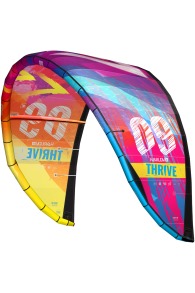
Thrive V2 Kite
1.884,-
1 - 6 desde 6
Productos por páginaCometa Harlem Kitesurfing
Harlem kites are neatly organised: each riding style has its own model. The Thrive and the Thrive V2 are three-strut allrounders for freeride, big air and waves, the Peak is a five-strut kite for big air, the Flow is made for the waves, the Thrive LiteX is the light wind version of the Thrive and the Hadlow Pro is a five-line C-kite for freestyle. The kites are designed by Ralf Groesel, in collaboration with Aaron Hadlow, and built at Brainchild in Europe. We also cover earlier models such as the Go and the Force. Which Harlem kite suits your level, weight and spot? Read all about Harlem kites below »
Harlem kites at Kitemana
Harlem keeps its line small, with one choice per discipline. On this page you'll read which technologies Harlem uses in its kites, from the welded PROWELD frame to the different bridles and canopies, and how the Thrive, Thrive V2, Thrive LiteX, Peak, Flow and Hadlow Pro compare. The older Harlem kites are covered too, such as the Go, the Force, the Pro, the Wave and the Ace, which is useful if you're looking secondhand. After that you'll read which kite and size suit each type of rider, and which bar goes with it. Our Harlem Kitesurfing brand page covers the people behind the brand and production at Brainchild. A board to match your kite is in the Harlem kiteboards. Express shipping worldwide.
Frequently asked questions about Harlem kites:


What technology does Harlem use in its kites?
The kites Harlem has built at Brainchild share the same base: a welded PROWELD leading edge, struts made of laminated Mylar and a light canopy. The differences between the models are mainly in the number of struts, the bridle and the type of canopy. Below you'll read what that means on the water.
PROWELD: a welded frame
With PROWELD, the leading edge is built from welded sections instead of stitched seams. Ralf Groesel developed the technique himself. It makes the frame lighter and better balanced, and puts less strain on the bladder. In the air, you notice it in a kite that holds its shape well and catches you quickly after a kiteloop.
Three or five struts
The Thrive, Thrive V2, Thrive LiteX and Flow have three struts, which keeps them light and agile. The Peak and the Hadlow Pro have five, which makes the profile more stable under heavy load, such as big jumps and hard landings. The struts are made of laminated Mylar: thin, light and stiff.
Bridle: fixed or with a pulley
The Thrive has a fixed bridle with seven attachment points, the Thrive V2 and the Flow have eight. A fixed bridle without pulleys gives a direct steering feel. The Flow also has a floating pulley at the tip, and its eight-point system spreads the load more evenly, for smoother steering on the wave. The Peak has a pulley bridle with a stopper on one side and medium-light bar pressure. On the Hadlow Pro you choose between two power settings and two steering settings.
Three types of canopy
The canopy determines how light and direct a kite feels. The Thrive, Thrive V2, Peak and Flow use Twincross FlyLite. The Thrive LiteX has Lite_X of 32 g/m² in the centre, which Harlem called the lightest canopy for tube kites at its launch, with tips of the stiffer FlyLite. The Hadlow Pro has a Flight_X canopy, which dampens power spikes so landings and passes feel calmer.
Reinforcement where it counts
The Peak has extra reinforced canopy around the wingtips and at the strut connections, plus a protective layer on the trailing edge that reduces flutter. The Thrive has this reinforcement only at the tips, which makes it slightly lighter. So the Peak is built to handle heavy loads, the Thrive for a light and versatile feel.
Boomtag and a custom print
Many Harlem kites have a Boomtag, including the Thrive V2 and the Hadlow Pro. With this NFC chip you register your kite and can check its origin. Because Harlem prints digitally, you can also have the Peak printed with your own logo or design. In the product video below, Harlem shows the Thrive.
Missing a size or model in the overview? Let us know and we'll check with Harlem whether it's still available.
Which Harlem kites are there and how do they differ?
Harlem kites are organised by discipline: allround and freeride, big air, waves, light wind and freestyle. Below you'll read what each model is made for, followed by the older kites you may still come across secondhand. The product overview on this page shows what's available.
Harlem Thrive
The Thrive arrived in 2024 as a three-strut allrounder, designed by Ralf Groesel and Aaron Hadlow. It has a fixed bridle with seven attachment points, a direct steering feel and plenty of depower, and suits riders from ambitious beginner to advanced. According to Ralf Groesel, the Thrive is made for 90 percent of all riders. It comes in sizes from 5 to 13 metres, plus 15 and 17 metres for light wind. Other kites of this type are in the allround kites.
Harlem Thrive V2
The Thrive V2 is the second version of the Thrive, with a fixed bridle with eight attachment points. As you build power, it flies faster to the edge of the wind window. That gives you more speed for take-off, more vertical lift and a second lift just before landing, and in strong wind it steers more predictably than the original Thrive. Leonardo Casati recommends it for riders who are just starting to kiteloop. The Thrive V2 comes in sizes from 5 to 13 metres.
Harlem Thrive LiteX
The Thrive LiteX is the light wind version of the Thrive, in 15 and 17 metres. Thanks to its very light canopy, it stays in the air when other big kites drop out of the sky, and for its size it turns quickly. According to Harlem, the 17 metre flies from 6 knots and the 15 metre from 8 knots, for a rider weighing 75 kg. It's made for light wind freeride, foiling and jumps with long hangtime. Other kites for light wind are in the lightwind kites.
Harlem Peak
The Peak is Harlem's kite for big air: five struts, a pulley bridle and medium-light bar pressure. It's built for vertical lift, long hangtime and single loops, and sits far forward in the wind window, so you go upwind easily. With a Peak and an Ascent board, Lorenzo Casati won the 2025 Megaloop Challenge in Noordwijk, and in October 2026 Lewis Crathern jumped 42.6 metres high on a 7 metre Peak, a Woo record. The Peak comes in sizes from 6 to 12 metres.
Harlem Flow
The Flow is made for the waves and is one of the wave kites: a low aspect ratio, three struts and a compact profile that turns tightly. With its light bar pressure and good drift, it follows you on the wave without pulling you off it, and it relaunches easily. The Flow is aimed at beginners to intermediates in the waves, and according to Aaron Hadlow it also works well for foiling and freeride. It comes in sizes from 5 to 10 metres.
Harlem Hadlow Pro
The Hadlow Pro is a five-line C-kite with five struts, developed together with Aaron Hadlow for technical freestyle, unhooked tricks and handle passes. After the pop it gives you slack, while keeping enough drift to stay stable through passes. Despite its C-shape it has plenty of low-end power, so you can still pop in lighter wind. The Hadlow Pro comes in 9, 11 and 13 metres.
Harlem Go
For years the Go was Harlem's allrounder, and it came out in several versions, from the Go V2 to the Go V5. Harlem called it its most successful kite of the early years. The Go V4 from 2020 had three struts and came in 5, 7, 9, 12 and 14 metres. It was a reliable kite for riders in their first years, with a wide wind range, an easy relaunch and plenty of depower. The Go V5 from 2022 had a single-pulley bridle and a shape somewhere between a delta C-kite and a bow kite, in sizes from 6 to 14 metres. In that line the 14 metre was called the Harlem Light, intended for light wind. Secondhand, a Go is a good kite for freeride and your first jumps.
Harlem Force
The Force came out in 2023 and was among the first Harlem kites from the Brainchild factory. It was a five-strut kite with a relatively high aspect ratio for freeride and big air, with PROWELD in the leading edge and struts, carbon battens in the trailing edge and a fixed bridle without pulleys. Three settings on the steering line pigtail let you adjust the turning speed and bar pressure. Testers praised its lift and easy kiteloops, but also found it direct and quick to react, so it's better suited to experienced riders. The Force came in sizes from 6 to 12 metres.
Harlem Pro and Wave
Around 2020, Harlem had two specialised kites alongside the Go. The Pro was a performance C-kite for unhooked freestyle, in 7, 9 and 12 metres. The Wave was designed for waveboards and foiling, in 6, 8 and 10 metres. For the same disciplines, Harlem later made the Hadlow Pro and the Flow.
Harlem Ace
The Ace is a strutless light wind kite with a swept C-shape that catches wind even in a faint breeze. Harlem made it for riders who want to ride in as little wind as possible, and points out itself that for jumping or strong wind you're better off with a different kite.
Version numbers and secondhand
When Harlem updates a kite, the name usually stays the same and a version number is added, as with the Go V2 to V5 and the Thrive V2. That way you can quickly tell which generation a kite belongs to. Looking for an older Harlem kite? Have a look at the secondhand kites. Curious about the differences between two generations? Ask our team.
Browse the different categories of Harlem kites
Harlem Allround/Freeride kites Harlem Big Air kites Harlem Wave kites Harlem Freestyle kites Harlem Lightwind kites Harlem Beginner kites
Which Harlem kite suits which type of rider?
For your first own kite
For your first own kite, the Thrive is the logical choice, both the original version and the Thrive V2. Both are in the Harlem beginner kites: three struts, predictable in the air and with plenty of depower, so you can progress at your own pace. The smallest size is 5 metres, handy for lighter riders and strong wind. Looking for a secondhand kite? Then a Go is an affordable alternative. Prefer everything in one go? The Harlem kitesurf set includes a Thrive, a Launch twintip, a Lead Bar and Sneaker Pads & Straps. Our beginner guide to kites explains what to look for in your first kite.
For freeride and allround use
Looking for one kite for most days on the water? Then the Thrive V2 is the answer here too. It rides comfortably, jumps well with a second lift and is light enough to take into the waves. Choose a board to match from the Harlem kiteboards, such as the Launch V2 as a freeride twintip.
For learning to kiteloop
Working on your first kiteloops? Start with the Thrive V2. Leonardo Casati recommends it for exactly that, because it feels soft on the bar and lets you clearly feel what the kite is doing. According to him, the Peak has a little more hangtime but is harder while you're still learning loops. Once your loops are under control, the Peak gets more power and height out of every rotation.
For big air
For advanced riders who want to jump as high and as long as possible, the Peak is the kite. The five struts keep it stable when you load up hard, and after a loop it catches you quickly. You can choose one size bigger than usual with the Peak, because the larger sizes also stay agile. The board to go with it is the Ascent, from the Harlem big air twintips. Secondhand, the Force is an option for big air.
For freestyle and unhooked riding
The Hadlow Pro is made for powered tricks and handle passes. It's aimed at advanced riders and pros who want to refine their tricks further, not at riders who are just starting out. Fly it with the Hadlow Pro Bar (see below) and the Descent twintip for Harlem's complete freestyle setup.
For wave riding
In the waves, choose the Flow. It steers lightly, drifts with the wave and relaunches easily, even while you're still learning to ride waves. Harlem doesn't make surfboards, so choose a directional from the kite surfboards of other brands.
For foiling and very light wind
In very light wind, the Thrive LiteX in 15 or 17 metres is Harlem's kite. Its light canopy keeps it flying when the wind drops, for light wind freeride and foiling. On a twintip, pair it with the Rise from the Harlem lightwind boards.
What size Harlem kite do you need?
To choose the right size, look first at your weight and then at how much wind your spot usually gets. Harlem calculates its wind ranges for riders weighing 75 kg. At that weight, the 9 metre Thrive V2 covers 17 to 31 knots, while the 12 metre gets you riding from 13 knots, up to 23 knots. For comparison, also in 9 metres: the Peak runs from 19 to 34 knots, the Flow from 15 to 30 and the Hadlow Pro from 16 to 34. Is it blowing 18 knots and do you weigh around 75 kg? Then a 9 metre Thrive V2 puts you just above the bottom of its range, and a 12 metre roughly in the middle. If you weigh more, choose a bigger size; if you weigh less, a smaller one is often enough. Want personal advice? Send us your weight and your home spot, or visit our megastore in Noordwijk, the Netherlands.
Which Harlem bar fits your kite?
Two bars go with the Harlem kites: the Lead Bar for the four-line kites and the Hadlow Pro Bar for the Hadlow Pro. So the bar you need follows from the kite you fly.
The Harlem Lead Bar. The Lead Bar is designed for the Thrive, Thrive V2, Thrive LiteX, Peak and Flow. It's 48.5 cm wide, with an asymmetric grip and low-stretch Dyneema SK99 lines: the power lines have a breaking strength of 550 kg, the steering lines 450 kg. You choose between 22 and 24 metre lines. Harlem recommends 22 metres for the smaller sizes and 24 metres for the larger ones: on the Thrive and the Peak from 11 metres, and on the Thrive LiteX always. The Click-in Quick Release resets with a single click, and the auto-untwist system automatically untwists your power lines after a rotation. Thanks to the adjustable V-split, with a high and a low setting, the Lead Bar fits almost any kite, including older Harlem kites and kites from other brands.
The Harlem Hadlow Pro Bar. The Hadlow Pro Bar was made together with Aaron Hadlow for the Hadlow Pro. It's a five-line, 40 cm bar with a low V and 22 metre lines, for direct and precise steering. The long freestyle chicken loop gives you freedom of movement when unhooking, and an extra-long safety leash comes with it. This bar also has the Click-In Quick Release and an auto-untwist system.
Older Harlem bars. Around 2020 the Go was flown with Harlem's IPS bar, on which you adjust the power with a knob instead of a cleat. If you fly an older Harlem kite and your bar needs replacing, the Lead Bar is a logical successor.
Both bars are in the Harlem bars, and the Lead Bar is also included in the Harlem kitesurf set. If something is worn, you'll find the parts in the Harlem spare parts, and for maintenance or a check you can turn to our kite repair service. In the video below, Harlem explains the Lead Bar.
Harlem lightwind kites at Kitemana
The Harlem Thrive LiteX in 5 knots
In this review we test the Harlem Thrive LiteX in very light wind, around 5 knots. You'll see how the light wind version of the Thrive holds up when most kites stay on the beach, in about as extreme as light wind conditions get. Not sure whether a light wind kite suits you? Read more in the question on which kite suits you, and our team is happy to help.
No tienes ningún producto en tu cesta.
¿No sabes por dónde empezar?
Contacta con nuestra atención al cliente para recibir asesoramiento
